
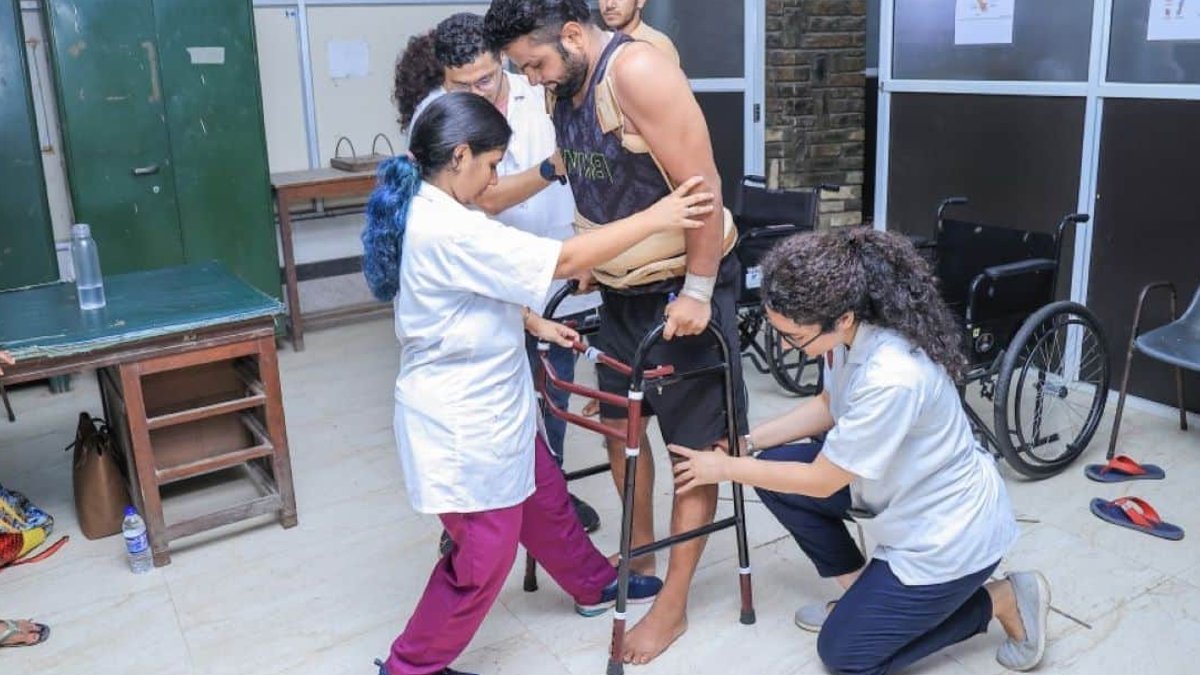
Allied and healthcare professionals spanning 57 different vocations, including physiotherapists, dieticians, lab technologists and psychologists, will soon have to register in the state and central registers in order to practice in their field. This move is part of the National Commission for Allied and Healthcare Professions’ (NCAHP) efforts to bring uniformity and standardization to allied healthcare education and professions.
The NCAHP has notified the Registration of Allied and Healthcare Professionals Regulations, 2026, which include provisions for the creation of official rolls of allied healthcare professionals at the state and national levels. These regulations require professionals to attend a minimum of 15 hours of continuous professional development education annually to be eligible for renewing their registration every five years.
Registration and Renewal Process
AHPs, including the Indian nationals who studied outside the country, will have to register themselves with one of the state councils, which will then forward the details to the commission for maintaining a central register. Those working in states without a functioning council can directly sign up for the central register. The regulations also allow for provisional registration of professionals who do not possess the requisite qualifications, provided they meet certain basic conditions.
The NCAHP chairperson, Yagna Shukla, stated that the body is drafting a separate set of regulations for registering professionals who fail to satisfy the new standard educational qualifications. These professionals will need to undergo bridge courses to obtain full-fledged registration. The registration process will not commence immediately, as another set of regulations regarding the formation and functioning of autonomous boards under state councils is yet to be notified.
The regulations cover 57 professions across 10 broad disciplines, including psychology, but exempt clinical psychologists who are eligible to register under the Rehabilitation Council of India (RCI). The inclusion of applied psychology and behavioral sciences among the professions under NCAHP’s ambit has caused confusion among psychology students and teachers due to its interdisciplinary nature.
Continuous Professional Development
According to the NCAHP regulations, registrations will be valid for a period of five years and need to be renewed after expiration. Professionals must complete 15 hours of continuous professional development education per year, with a maximum of 50% of these participations allowed in online mode. This provision is similar to the continuous nursing education requirement for nurses to continue in the profession.
Shukla explained that the purpose of this requirement is to orient allied healthcare professionals towards upskilling, although she acknowledges that professionals may treat it as a formality rather than undergoing actual training. The regulations also stipulate that while professionals can apply for registration in only one state register based on their residence, they can practice in other parts of the country after intimating their state council.
Read Also: West Bengal inspects empty schools
The state councils are required to accept or reject applications for registration within a month and provide a written explanation in case of rejection. Professionals can appeal against rejection to the NCAHP. The commission has built a central registration portal, which will be linked to state portals and is currently undergoing a trial run.
As the allied healthcare sector continues to grow, the need for standardized education and training becomes increasingly important. The NCAHP’s efforts to establish a uniform registration process and continuous professional development requirements aim to ensure that professionals in this field are equipped to provide high-quality care to patients.
The NCAHP’s regulations have been released almost a year after they were proposed, and the commission hopes that the government will soon notify the final version of the document regarding the formation and functioning of autonomous boards under state councils. With the draft regulations for these bodies already released for public consultation, the process of establishing a standardized registration system for allied healthcare professionals is underway, with the goal of improving the quality of care provided in this sector.
The regulations pave the way for the creation of official rolls of allied and healthcare professionals (AHPs) at both the state as well as the national level. The central register will be linked to the state registers, and professionals will be able to access their registration details online.
According to the NCAHP regulations, the registration fee for allied healthcare professionals will be determined by the state councils, and the fee for renewal will be 50% of the initial registration fee. The regulations also allow for AHPs who are offering their services without possessing the requisite qualifications to register provisionally.
The NCAHP has prepared common course structures, curricula, and admission criteria for 17 professions, and the regulations require professionals to meet these standards to be eligible for registration. The commission has also established a system for addressing grievances and appeals, and professionals will be able to submit their appeals to the NCAHP.
Implementation and Next Steps
The NCAHP chairperson, Yagna Shukla, has stated that the commission is working to finalize the regulations for the formation and functioning of autonomous boards under state councils. Once these regulations are notified, the registration process for allied healthcare professionals will commence, marking a major milestone in the development of the allied healthcare sector.


Leave a Reply